Retro Stacked Cheer with Heart
In the competitive landscape of custom apparel and promotional merchandise, visual impact is often determined by the subtleties of design execution. For professionals in embroidery, screen printing, and small-batch manufacturing, finding digital assets that balance aesthetic trendiness with technical reliability is a constant challenge. The Retro Stacked Cheer with Heart embroidery design addresses this need by combining nostalgic 1970s typography with a digitizing structure optimized for various fabric types. This review examines the design’s structural integrity, stylistic appeal, and practical application to determine its value for serious creators and business owners.
Design Composition and Aesthetic Appeal
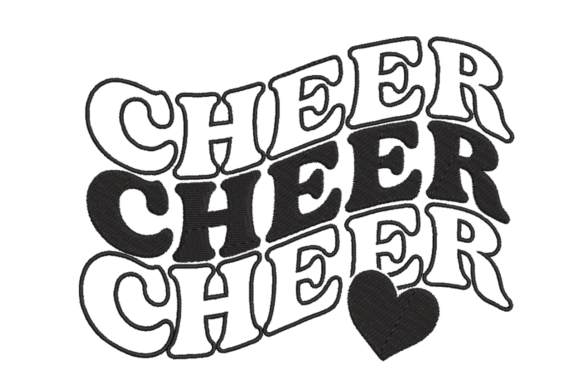
The core strength of this asset lies in its typographic arrangement. The design features the word "CHEER" repeated three times in a vertical stack, utilizing a wavy, groovy font characteristic of mid-century modern graphic design. This specific stylistic choice taps into the enduring popularity of retro aesthetics, which remain highly relevant in youth culture, sports marketing, and lifestyle branding. However, the design avoids being purely decorative; it employs a deliberate contrast in stitching techniques to create depth and visual hierarchy.
The top and bottom rows are stitched as clean, crisp outlines. This technique reduces thread consumption while maintaining legibility, allowing the background color of the garment to show through the letters. In contrast, the center row is filled with solid embroidery stitches. This creates a high-contrast focal point that anchors the composition. The inclusion of a solid accent heart at the bottom serves as a visual capstone, balancing the weight of the stacked text and adding a touch of sentimentality that resonates well with team spirit and community-focused branding.
For marketers and designers, this duality—outline versus fill—is significant. It allows the design to feel dynamic rather than static. On a dark-colored hoodie, the outlined sections will appear subtle and sophisticated, while the filled center section will pop with intensity. This makes the Retro Stacked Cheer with Heart particularly effective for game-day wear, where visibility from a distance is crucial, yet detail is appreciated up close.
Technical Digitizing and Stitch Quality
From a production standpoint, the quality of the underlying digitization is paramount. A visually appealing design can fail if the stitch path is poorly planned, leading to puckering, thread breaks, or misalignment on the hoop. Professional evaluation of this file suggests a high level of attention to stitch density and direction. The smooth, flowing curves of the wavy font require precise needle positioning to prevent distortion, especially when embroidered on stretchy materials like fleece or jersey knits.
The design appears engineered to maintain its shape across different blank materials. Heavy cotton blends, typical of varsity jackets, provide a stable base that preserves the crispness of the outline stitches. Meanwhile, softer fabrics like fleece hoodies benefit from the balanced tension likely built into the file, ensuring the curves do not collapse under the weight of the fill stitches. This versatility is a key selling point for businesses that operate with diverse inventory but wish to offer consistent product quality.
Furthermore, the professional digitizing ensures that the transition between the outlined sections and the solid fill is seamless. There are no abrupt changes in stitch density that might cause bulkiness or uneven texture. This attention to detail minimizes post-production trimming and reduces the likelihood of rework, which directly impacts profitability for high-volume orders.
Performance on Various Garment Types
- Hoodies and Sweatshirts: The design excels here due to the substantial fabric weight, which supports the fill stitches without excessive puckering. The retro vibe pairs naturally with casual athletic wear.
- Varsity Jackets: The bold, stacked layout mimics traditional collegiate lettering, making it an excellent alternative to standard chenille patches. It offers a more integrated look that sits flush against the jacket material.
- Cotton T-Shirts: While suitable, lighter fabrics may require additional stabilizer usage to prevent the dense fill stitches from pulling the fabric. The outlined sections help mitigate this risk compared to all-fill designs.
- Tote Bags: For canvas or heavy-duty cotton totes, the design provides a durable, long-lasting graphic. The heart accent adds a personal touch that appeals to camp organizers and team leaders looking for personalized gifts.
Target Audience and Use Cases
The Retro Stacked Cheer with Heart design is not limited to traditional cheerleading squads. Its broad appeal extends to several distinct market segments:
- School and Community Teams: Coaches and administrators seeking affordable, customizable spirit wear for basketball, volleyball, or dance teams will find this design cost-effective and visually striking.
- Small Business Owners: Entrepreneurs in the fitness, wellness, or lifestyle sectors can use this design for branded merchandise. The retro aesthetic aligns well with brands targeting millennials and Gen Z consumers who value nostalgia and authenticity.
- Event Organizers: Summer camps, retreats, and festivals often need unique branding elements. This design can be easily adapted with different color schemes to match event themes, offering a cohesive look for staff uniforms or attendee swag.
- Freelance Embroiderers: Professionals looking to expand their catalog with trendy, ready-to-stitch files will appreciate the immediate usability of this asset. It requires minimal adjustment, allowing for quick turnaround times on rush orders.
Practical Considerations and Limitations
While the design offers numerous advantages, users should consider certain practical limitations. First, the success of the outline stitches depends heavily on the stability of the base fabric. On extremely thin or slippery materials, such as lightweight polyester performance shirts, the outlined letters may shift or pucker if not stabilized correctly. In such cases, using a tear-away or cut-away stabilizer is recommended.
Second, color selection plays a critical role in the design’s effectiveness. Because the top and bottom rows are outlines, the contrast between the thread color and the garment color must be sufficient to ensure readability. Low-contrast combinations, such as light gray thread on white fabric, may render the outlined sections nearly invisible, undermining the design’s intended layered effect. High-contrast pairings, like black thread on white or navy on heather gray, yield the best results.
Additionally, while the design is versatile, it is specifically tailored for embroidery. Users attempting to adapt it for screen printing or heat transfer vinyl (HTV) may encounter challenges with the fine details of the wavy font. The intricate curves may require simplification or resizing to maintain clarity in those mediums. Therefore, this asset is most valuable to those with access to embroidery machinery.
Long-Term Value and Workflow Integration
For businesses focused on scalability, the Retro Stacked Cheer with Heart design offers strong long-term value. Its timeless aesthetic ensures that it will remain relevant beyond a single season, reducing the need for frequent design updates. This consistency allows brands to build recognition around a signature look, whether applied to a line of sweatshirts or a collection of tote bags.
Moreover, the file’s compatibility with major embroidery formats enhances its utility. Professionals can integrate it into existing workflows without needing specialized software or extensive conversion processes. This ease of use translates to time savings, which is a critical factor in maintaining competitive pricing and meeting tight deadlines.
In conclusion, the Retro Stacked Cheer with Heart stands out as a well-executed embroidery design that balances artistic flair with technical precision. Its ability to perform reliably across a range of garments and its appeal to a broad demographic make it a valuable asset for anyone involved in custom apparel production. By understanding its strengths and adhering to best practices in stabilization and color selection, users can leverage this design to create high-quality, market-ready products that resonate with their audience.