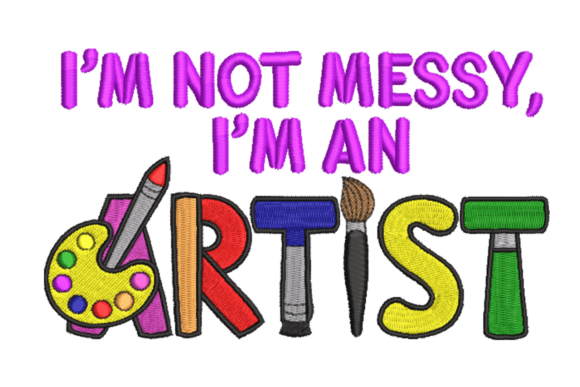
I’m Not Messy I’m an Artist: Navigating the Creative Workspace Myth
The phrase I’m Not Messy I’m an Artist is more than just a catchy slogan or a humorous sticker on a coffee mug; it is a cultural shorthand for a specific relationship between creativity and order. For decades, this sentiment has served as both a shield and a badge of honor for creators worldwide. It suggests that chaos is not a bug in the creative process, but a feature—a necessary byproduct of deep thought and boundless imagination. However, while there is truth to the idea that rigid structures can sometimes stifle inspiration, relying on clutter as a primary mode of operation often leads to frustration, lost opportunities, and diminished professional credibility.
Whether you are a freelance graphic designer working from home, a small business owner managing inventory, or a student navigating your first semester, understanding the distinction between productive chaos and destructive disorganization is vital. The goal is not to become a minimalist robot, but to cultivate an environment where creativity can thrive without being hampered by unnecessary friction. This article explores the realities behind the "messy artist" trope, highlights common pitfalls associated with unchecked disorder, and provides practical strategies for maintaining a functional, efficient, and inspiring workspace.
The Allure of the "Creative Chaos"
Why do so many people cling to the idea that they cannot function without a mess? Psychologically, clutter can feel like externalized thought. When ideas are scattered across a desk, pinned to walls, or saved in endless browser tabs, they feel tangible and alive. There is a genuine fear that imposing strict order might kill the spontaneity of the creative spark. Many professionals believe that if they clean up their space, they will also clean up their ability to think outside the box.
However, this perspective often overlooks the cognitive load that clutter imposes. Research in environmental psychology suggests that visual noise competes for attention, leading to decreased focus and increased stress levels. While a certain level of organized chaos might work for some high-energy individuals, it rarely scales well. As projects grow in complexity and deadlines tighten, the "messy artist" approach often transitions from a quirky personality trait to a significant liability.
Common Misconceptions About Organization
One of the most damaging misunderstandings is equating organization with rigidity. People often assume that having a system means losing flexibility. In reality, effective systems provide a foundation that frees up mental energy. When you know exactly where your tools, files, or resources are, you spend less time searching and more time creating. This shift from administrative burden to creative flow is where true efficiency lies.
Another common error is assuming that one-size-fits-all organizational methods work for everyone. What works for a painter who needs large surfaces for canvas storage will not work for a digital marketer who relies on cloud-based file structures. Evaluating your specific workflow is crucial before adopting any new system.
Pitfalls of Unchecked Disorder
When the "I’m Not Messy I’m an Artist" mindset goes unchallenged, several negative outcomes can emerge. These are not merely aesthetic issues; they have tangible impacts on productivity, cost, and professional reputation.
- Lost Time and Resources: Searching for misplaced files, tools, or documents consumes hours that could be spent on billable work or creative development. Over a year, this adds up to significant financial loss.
- Missed Deadlines: Disorganization often leads to overlooked details. A missed email, a forgotten attachment, or a misplaced contract can derail a project timeline and damage client trust.
- Increased Stress: Visual clutter contributes to elevated cortisol levels. A chaotic environment can make it difficult to relax, recharge, or enter a state of deep focus, leading to burnout.
- Professional Perception: Clients and collaborators often judge competence based on presentation. Even if the work is excellent, a disorganized portfolio, messy website, or cluttered physical studio can signal a lack of attention to detail.
Practical Strategies for Balanced Creativity
Avoiding these pitfalls does not require turning your workspace into a sterile laboratory. Instead, it requires intentional design. Here are several approaches to help you maintain your artistic spirit while minimizing the downsides of clutter.
Implement the "Touch It Once" Rule
This simple principle involves handling each item or piece of information only once when you first encounter it. If it is a physical document, decide immediately whether to file it, shred it, or act on it. If it is an email, reply, delete, or schedule it for later. This prevents piles from forming and reduces the mental backlog of unfinished tasks.
Create Designated Zones
Instead of trying to organize everything at once, define specific zones for different activities. Have a "creation zone" where mess is allowed during active brainstorming, but establish a "cleanup protocol" for when that session ends. For example, a writer might leave notes scattered on the desk during drafting but clear them away before starting the editing phase. This allows for creative freedom within controlled boundaries.
Digitize and Archive Strategically
For digital creatives, the equivalent of a messy desk is a cluttered desktop or hard drive. Use consistent naming conventions and folder structures. Regularly archive old projects rather than letting them accumulate in active directories. Tools like cloud storage services can help keep files accessible without consuming local device space, reducing the need for physical backups that contribute to clutter.
Evaluating Your Current Setup
Before making drastic changes, take stock of your current environment. Ask yourself critical questions to identify what is truly hindering your progress:
- Where do I lose the most time? Is it looking for files, finding tools, or deciding what to do next?
- What items are essential versus decorative? Keep only what serves a current purpose in your immediate workspace.
- Does my environment support my best work? Notice how you feel in different spaces. Do you feel calm and focused, or anxious and distracted?
By answering these questions honestly, you can pinpoint specific areas for improvement. Perhaps you need better labeling systems, or maybe you simply need to declutter your digital inbox. Small, targeted adjustments often yield better results than overwhelming overhauls.
The Professional Edge
Ultimately, mastering your environment is a professional skill. Whether you are a blogger, an educator, or a freelancer, your ability to manage resources reflects your ability to manage projects. Embracing organization does not mean abandoning your artistic identity; it means empowering it. When you remove the barriers of chaos, you create more space for innovation, collaboration, and success.
The next time you hear someone say, "I’m Not Messy I’m an Artist," consider the deeper implications. True artistry involves discipline as much as inspiration. By cultivating a balanced workspace, you honor both your creative soul and your professional responsibilities. This balance allows you to produce high-quality work consistently, meet your commitments reliably, and enjoy the process without the underlying stress of disorder. Start small, stay intentional, and watch as your productivity—and your peace of mind—soars.